



Innovation
A scalable remote monitoring platform enabling proactive, hospital-level care safely delivered at home

Name and title of Project Lead
Cecilia Price, Impact Specialist, Luscii
About
Luscii is a remote monitoring platform that addresses the critical NHS challenges of rising demand on acute hospital services, increasing bed occupancy, and the need to deliver safe, effective care closer to home.
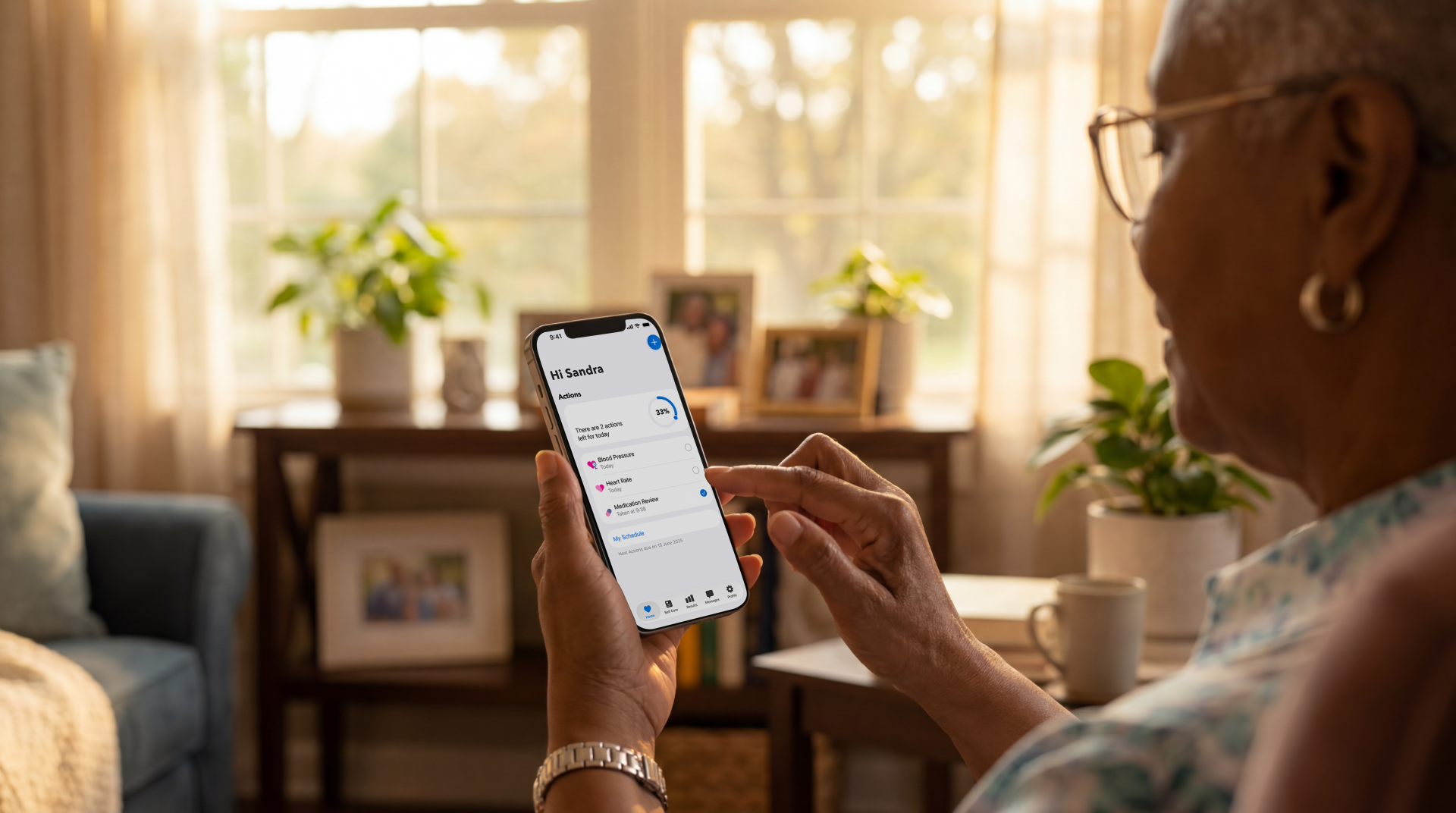
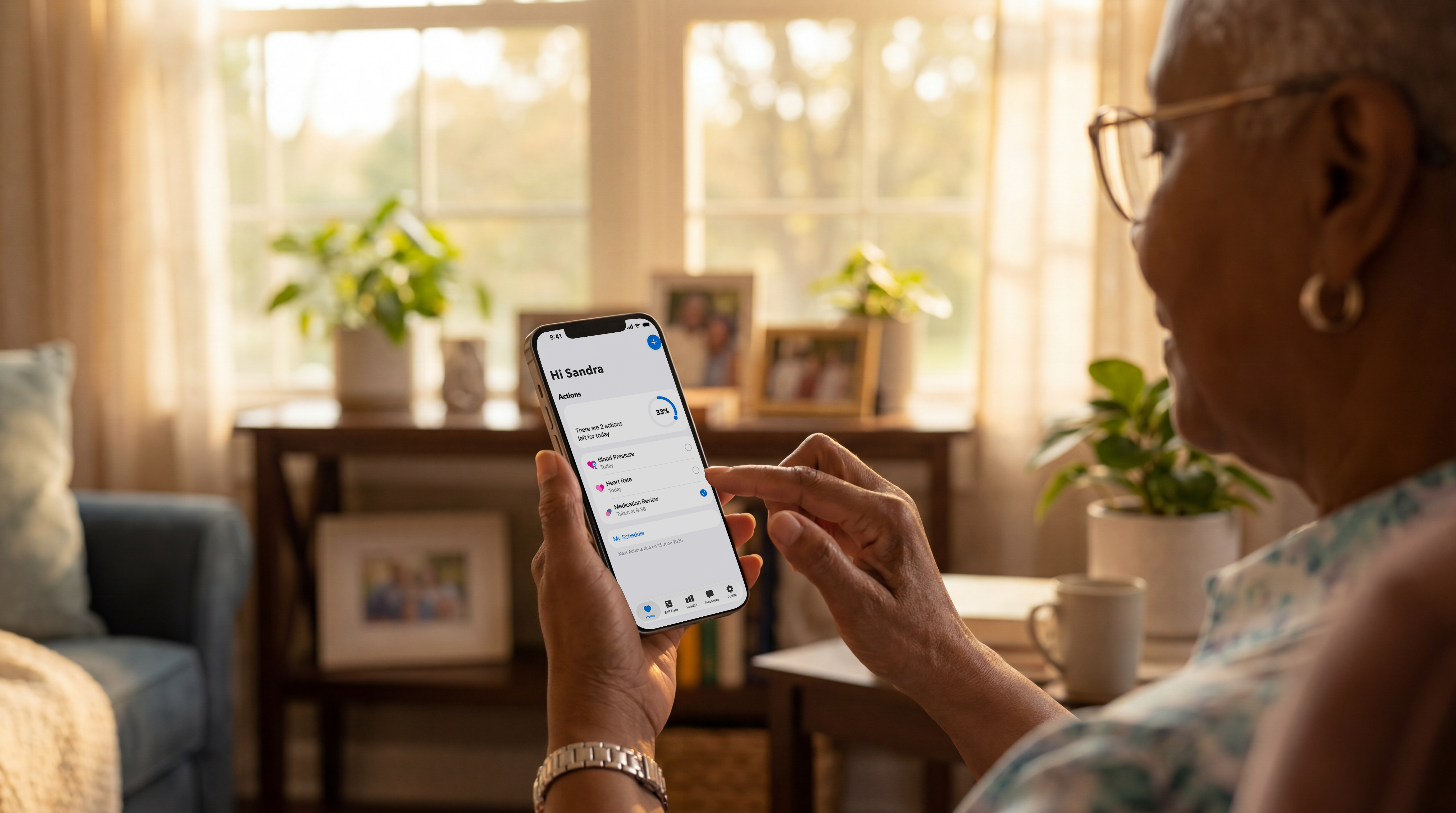
Through the Luscii platform, clinicians can remotely monitor patients across multiple acute pathways, including respiratory medicine, frailty, haematology and acute general medicine. Clinical teams can identify deterioration earlier and intervene before patients require acute treatment and patients who would traditionally remain in hospital are able to receive hospital-level care safely at home. The platform combines a patient app, clinical dashboard, intelligent alerting, video consultations and pathway specific monitoring.
Supported by SBRI Healthcare, Luscii was able to conduct an independent evaluation of the Luscii-enabled Acute Virtual Ward (AVW) service at Maidstone and Tunbridge Wells NHS Trust (MTW), and to create a blueprint for scaling AVWs. The evaluation included health economic, environmental and health inequalities evidence to support wider NHS adoption.
The project also supported MTW and Luscii in establishing a Patient and Public Involvement and Engagement Steering Group (PPIE Steering Group) which co-designed the evaluation as well as other parts of the AVW service, including patient-facing materials.
Growth and Commercial Traction
- CE Class IIa certified clinical engine under MDR
- DTAC and Cyber Essential certified
- To date, implemented over 350 remote care programmes across 11 countries
- 225+ unique pathways supported for various long-term conditions, including heart failure, COPD and asthma
- Partnership with Graphnet Health to transform NHS care for 500,000 patients
- Estimated reduction of approximately 11.5 kgCO2e per virtual ward admission compared with equivalent inpatient care, driven primarily through reduced hospital utilisation and avoided bed days
Benefits to the System
- As of May 2026, Luscii has been implemented in 15 ICBs, 20 Trusts, and ~15 PCNs
MTW’s service operates as a generalised, 24/7 acute virtual ward designed to improve patient flow and release hospital capacity at scale. The MTW evaluation demonstrated:
- An average reduction of 4.36 hospital bed days per patient, with respiratory pathways achieving reductions of over 6 bed days per patient
- Positive economic impact, with a benefit-cost ratio (BCR) of 1.33, meaning £1.33 of value generated for every £1 invested
(independent evaluation at MTW) - Pilot modelling demonstrated a net present value (NPV) of approximately £635k for MTW, with projected regional scale-up across the South East showing a potential £5.4m five-year NPV
Benefits to Patients
- 230,000+ patients supported globally through remote monitoring and virtual care pathways, including 40,000 within the NHS
- Fully compliant with the accessibility requirements of WCAG AA standards, ensuring that all patients, including those with disabilities, can easily navigate and utilise the app. Users can leverage the built-in accessibility settings on their phones to customise the app according to their specific needs
The MTW evaluation demonstrated:
- 94% of MTW virtual ward patients agreed that receiving care at home positively impacted their wellbeing
- Net Promoter Score (NPS) of 68.7, demonstrating high patient satisfaction and likelihood to recommend the service
- Lower hospital returns and readmissions compared with matched non-virtual ward patients, supporting safer recovery and continuity of care at home
- Mortality rates within the MTW virtual ward cohort were significantly lower than expected at 1.4%compared with an expected 5.1%
- 92% of MTW virtual ward patients were successfully discharged from the service without requiring transfer back into hospital care
"“I found the Virtual Ward a totally positive experience. Being monitored from home helped my mental wellbeing and every member of staff I came into contact with was caring and supportive.”"
Acute Virtual Ward patient
Date published
August 2026